
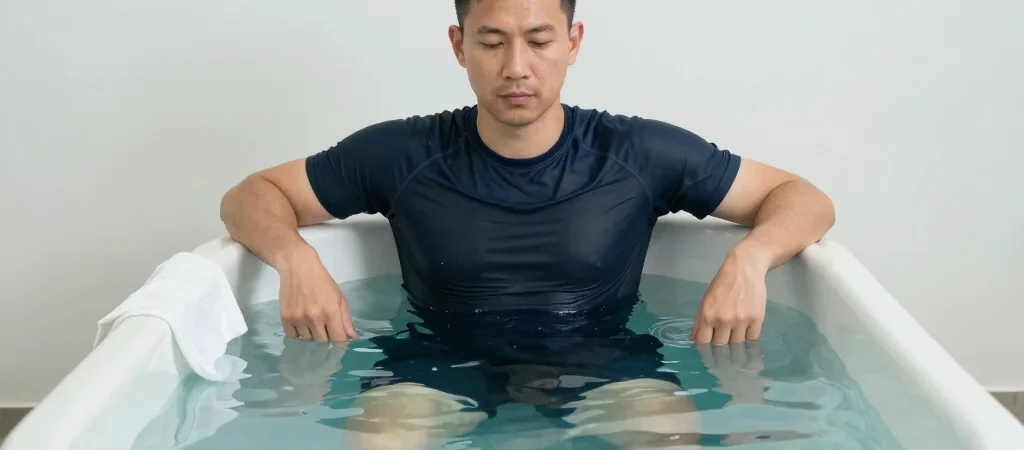
“Cold therapy” can mean standing in a chilled chamber, sitting in cold water or applying an ice pack to one area. Those experiences are not interchangeable, even when they are grouped under the same recovery label. A useful starting point is to identify the exposure, the reason for using it and the limits of what is known.
Different exposures, different trade-offs
Cold-water immersion exposes a large area of the body to water, while whole-body cryotherapy uses very cold air for a brief, supervised session. A local cold pack is a smaller, targeted exposure. Temperature, duration and the way heat leaves the body all differ, so findings about one method should not automatically be applied to another.
What recovery research can tell us
Some research on cold-water immersion suggests it may reduce how sore people feel after strenuous exercise in the short term. That is not the same as proving faster healing, preventing injury or improving every measure of performance. Researchers have also raised questions about regular cold immersion immediately after strength training and its potential effect on training adaptations; the evidence is still developing, so the timing and purpose matter.
Keep the risks in view
Sudden cold exposure can trigger gasping, rapid breathing and changes in heart rate and blood pressure. People with cardiovascular or respiratory conditions, or other health concerns, should get individualized medical advice before trying it. Stop if you feel unwell, avoid pushing through numbness or distress, and do not treat a cold session as a substitute for sleep, food or a sensible training plan.